CSI 09 67 23 · Resinous flooring
Urethane cement flooring
The floor for wet, hot, acidic process rooms. A cementitious urethane mortar that moves with the slab through steam washdowns and freezer-door thermal shock instead of shearing off it.
- Installed$8–$16+/sf
- Thickness2mm – 3/8 in.
- Forklift traffic24–48 h
- Service range−40°F to +250°F
Why urethane cement is the default in food and beverage plants
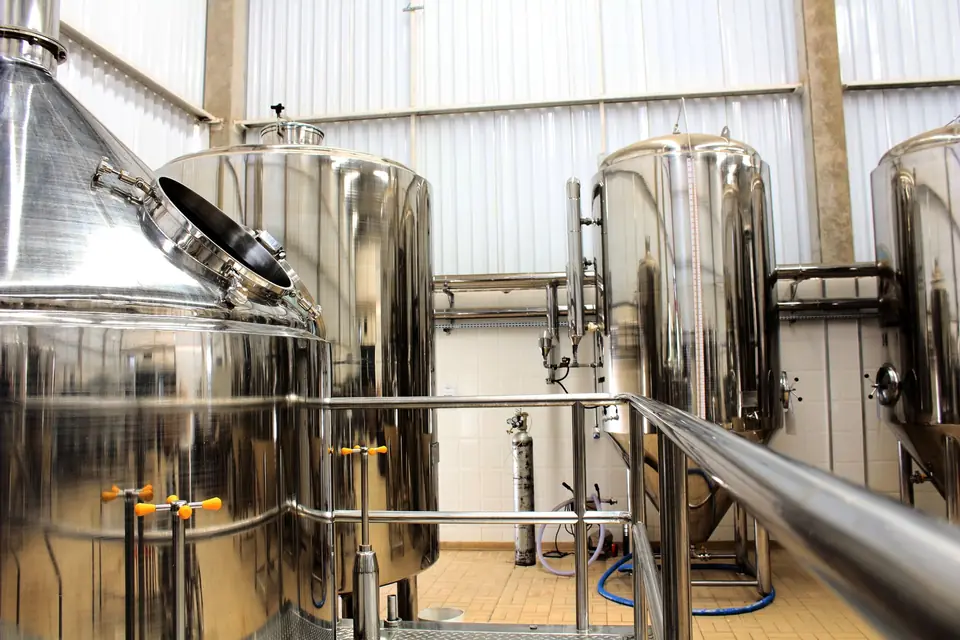
Urethane cement combines a polyurethane binder with cement and graded aggregate. Cured, it has a coefficient of thermal expansion close to concrete's, so a 180°F CIP rinse or a 250°F steam-down does not build shear stress at the bond line the way it does under a rigid epoxy. That is the property that keeps floors bonded in kill floors, fryer rooms, dairies and breweries where daily temperature swings exceed 150°F.
The same chemistry resists the organic acids that destroy epoxy and concrete in food plants — lactic acid from dairy, citric and acetic acid from beverage and sauce lines, animal fats and blood — and it is tolerant of a damp slab. Where standard epoxy needs a moisture vapor barrier above roughly 75–80% RH, most 1/4 in. urethane cement systems are rated well above that (commonly 90%+ RH or 10–12 lbs MVER by manufacturer), which often removes a $2.25–$6.00/sf MVB line from the budget.
Three builds, three price bands
| Build | Thickness | Installed $/sf | Expected life | Where it belongs |
|---|---|---|---|---|
| Slurry / broadcast | 2–3mm | $8.00–$10.00 | 12–18 yrs | Dry processing, packaging, light carts, mezzanines |
| Standard heavy-duty trowel | 1/4 in. (6mm) | $10.00–$13.00 | 15–20+ yrs | Wet process rooms, sanitation corridors, beverage fill lines |
| Extreme thermal shock trowel | 3/8 in. (9mm) | $12.00–$16.00+ | 15–20+ yrs | Kill floors, cook rooms, fryers, breweries, boiling/steam washdown |
Turnkey ranges include standard ICRI CSP 5 preparation. Small rooms under 2,000 sf carry a 20–35% mobilization uplift; plants over 20,000 sf see 12–22% scale savings. How these ranges are built.
Preparation: CSP 5 and anchoring every edge
Urethane mortars are specified over a medium-heavy ICRI 310.2R profile — CSP 5, produced by heavy shot blasting or by scarifying followed by a shot-blast pass to remove the bruised layer. Every free edge is anchored with a saw-cut keyway (typically 1/4 in. deep, twice the system thickness wide) at doors, drains, equipment pads and terminations, because the edge is where thermal cycling starts a delamination.
- Keyway anchor cuts at all terminations, trench drains and column pads
- Expansion and isolation joints honored through the system; control joints filled after cure
- Slope-to-drain re-built in the mortar layer or a pre-pitched underlayment
- Integral cove base trowelled monolithically with the floor
Integral cove base
USDA/FSIS and FDA-inspected rooms need a seamless sanitary transition from floor to wall, typically 4–6 in. high with a 3/8 in. minimum radius at the toe. Urethane cement cove is trowelled from the same mortar over a cant strip and capped at the top.
| Cove detail | Height | Installed $/LF |
|---|---|---|
| Urethane cement integral cove | 4 in. | $15.00–$17.50 |
| Urethane cement integral cove | 6 in. | $17.50–$20.00+ |
| Epoxy integral cove (for comparison) | 4–6 in. | $10.00–$15.00 |
Failure modes we design out
| Failure | Cause | Prevention in the spec |
|---|---|---|
| Edge delamination at drains | No keyway anchor; thermal cycling | Saw-cut keyways, drain flange integration |
| Cracking over moving cracks | Structural slab movement reflected | Route and fill or honor joints; never bridge active cracks |
| Surface staining / chalking | UV exposure, aromatic binder | Aliphatic urethane topcoat where light is a factor |
| Pooling water | Floor flat to drains | Slope 1/8–1/4 in. per foot built into the mortar |
Urethane cement is not a decorative finish: colors are limited, the texture is functional and it costs more than epoxy upfront. Where the room is dry and ambient, a high-build epoxy is the better value; where the room is a freezer that cannot be shut down, see MMA fast-cure.
Get the slab walked before the budget is locked
Send square footage, facility type, slab condition and your shutdown window. A Bodenmuller estimator reviews the scope, plans ASTM F2170 testing where it is needed and returns a formal proposal.